How to Read Your National Grid Bill
National Grid delivers electricity across upstate New York, most of Massachusetts, and Rhode Island. Your bill separates a delivery charge — National Grid's regulated fee for the wires — from a supply charge for the electricity itself, and in deregulated territories you can choose an alternate supplier for that supply portion while National Grid keeps delivering the power either way.
Delivery vs. supply
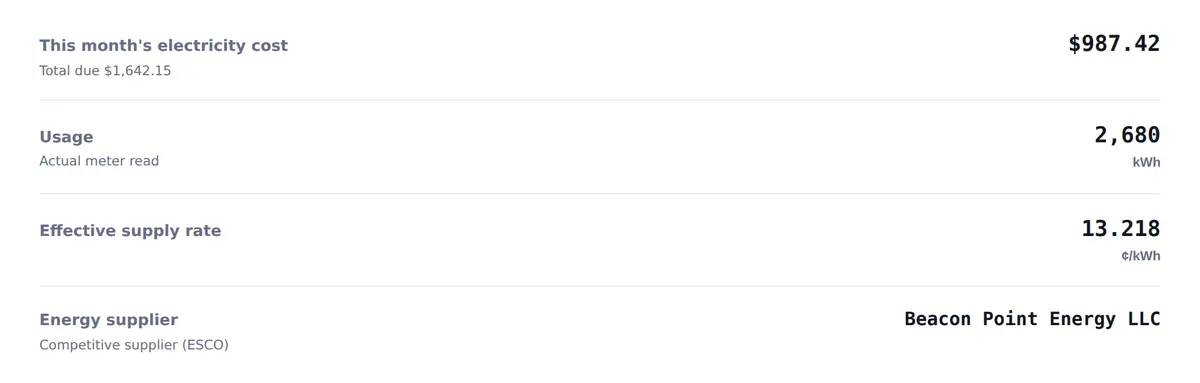
National Grid's own guidance draws the line clearly: delivery charges cover the cost of getting electricity to your property — the poles, wires, and infrastructure National Grid maintains — while the Electricity Supply Charge covers the actual energy. If you choose an alternate supplier, National Grid says directly that "the price will be what you agree upon with that supplier," and for any concerns about that portion of the bill, National Grid points customers to the supplier itself rather than to National Grid.
The Delivery Adjustment line
One line item that trips people up is the Delivery Adjustment — it's not a separate charge on top of delivery, but a combination of the Delivery Charge Adjustment and the Commodity Adjustment Charge (CAC), both periodic true-ups tied to National Grid's regulator-approved rates. It can move up or down from bill to bill even if your usage hasn't changed much, which is one reason two bills with similar usage can still show noticeably different totals.
Choosing an alternate supplier
Where National Grid territory overlaps with a deregulated market — parts of upstate New York, Massachusetts, and Rhode Island — customers can shop for a competitive supplier instead of staying on National Grid's own supply rate. National Grid continues to read the meter, deliver the power, and respond to outages no matter which supplier is on the account; only the supply price and the company billing for it change.
If a bill looks off
Because delivery and supply are billed and adjusted somewhat independently, a bill that looks unusually high is worth splitting apart before assuming it's a rate problem: check whether the supply charge, the delivery charge, or the Delivery Adjustment moved, and compare against a bill from the same month a year earlier if you have one, since usage swings by season are common and not always the driver.
Frequently asked questions
Can I choose a different supplier than National Grid?
In deregulated National Grid territories, yes. National Grid's own guidance confirms that if you pick an alternate supplier, the price is whatever you agree to with that supplier directly — National Grid keeps handling delivery either way.
What's the Delivery Adjustment on my National Grid bill?
It's a line item that combines the Delivery Charge Adjustment with the Commodity Adjustment Charge (CAC) — periodic true-ups tied to National Grid's approved rates, separate from the base delivery and supply charges.
Who do I contact about a supply charge if I have a third-party supplier?
National Grid directs customers with an alternate supplier to contact that supplier directly about the Electricity Supply Charge portion of the bill, since National Grid no longer sets that price once you've switched.
See this on your own bill
Upload your National Grid bill and Certo reads it for you — a free bill health score, a plain-English breakdown, and whether your supply rate is competitive.
Want it tracked automatically every month?
Plus and Pro track bill history, flag rate hikes and unusual usage, and (on Pro) build a custom efficiency checklist and savings tracker — so you're not re-checking this by hand.